One Big Dumpster or Two Smaller Hauls? How to Decide
October 16, 2026
Short term and long term dumpster rentals split along one line: whether your debris shows up all at once or keeps trickling in. Get that right and the rest falls into place.
Short term rentals are built for projects with a hard stop. Think a single garage or basement cleanout, one room torn down to the studs, a move out, or an estate clearing. The debris comes fast and then it's done. Most short term drops sit for two to seven days, which is plenty when the work happens in one push. Spring cleanouts after the snow finally melts and fall yard purges before the first hard freeze fit this pattern almost every time.
Long term rentals earn their keep when the mess arrives in waves. A whole house remodel, a new addition, ongoing commercial turnover, or landscaping spread across a season all feed a bin in bursts with quiet stretches between. These rentals run weeks, sometimes a month or more. The bin becomes part of the job site, not a one time visit. Because the building season is short, a lot of long term containers go out in summer when crews are racing to finish exterior work before cold weather shuts it down.
Quick Answer: Choose one big dumpster when your project produces a steady stream of mixed, lightweight debris, your driveway can hold a larger container, and you want everything gone in a single pickup. Choose two smaller hauls when the debris comes in distinct phases, when part of it is heavy material like concrete or shingles, or when space and clearance limit the size you can place. The deciding questions are simple: how much debris, how heavy is it, when does it show up, and where can the container sit? Answer those four and the right plan usually becomes obvious.
You have a project on the calendar. Maybe it is a basement cleanout that turned into a full house purge, or a bathroom gut that is about to become a kitchen too. You call around, and the first thing you hear is a question you cannot answer yet: do you want a 10, 15, or 20 yard container? A friend suggests the biggest one so you never have to think about it again. Another friend says two small ones are easier on the driveway. Both sound reasonable, and both can be right.
Neither plan wins every time. The better choice depends on what you are throwing away, how fast it piles up, and what your property can handle. Here is how to work through the decision the way a local
dumpster rental owner would walk you through it, so you land on the plan that keeps your project moving.
Start With the Debris, Not the Dumpster
Before you compare sizes, take ten minutes to walk the project and sort what is coming out. Debris falls into two broad groups, and they behave very differently in a container.
Light And Bulky Debris
Furniture, mattresses, cardboard, carpet, branches, and household junk occupy significant space but weigh relatively little, making larger containers more cost-effective for disposal.
Dense And Heavy Debris
Concrete, brick, dirt, tile, shingles, and wet drywall reach weight limits quickly. Check container restrictions carefully because heavy materials require careful loading.
If your project is mostly the first group, a single larger container is a strong candidate. If it is mostly the second group, or a mix with a heavy portion, splitting the work into smaller hauls often makes more sense. A 10 yard container is a popular pick for dense material because it is hard to overload by volume, and a quick swap handles the rest.
When One Big Dumpster Is the Better Call
A single larger container earns its place in several situations. Think about whether your project looks like one of these.
Whole House And Estate Cleanouts
Clearing entire homes generates debris quickly. A 20-yard container handles roughly six pickup truckloads, while larger estates may require 30 yards.
A Short, Intense Work Window
When family members or crews work within tight deadlines, having one container ready prevents delays while waiting for replacements or pickups.
Mixed, Lightweight Material
Household junk, furniture, and general cleanout debris fill containers by volume, making larger sizes practical for efficient disposal without exceeding weight limits.
Fewer Moving Parts
One delivery and pickup simplify scheduling, site preparation, and organization. This approach works especially well when your cleanup timeline is limited.
Bulky Pieces That Need Room
Sectional sofas, swing sets, and old doors need extra space. Longer, deeper containers accommodate these awkward items without excessive cutting or stacking.
TIP: Picture the whole project in pickup truck loads. A 10 yard container holds about three loads, a 15 yard about four to five, and a 20 yard about six. If your honest count lands between sizes, ask for a recommendation before you book, because nobody wants to run short on the last afternoon.
When Two Smaller Hauls Make More Sense
Splitting the work across two containers, or one container hauled away and replaced, is the smarter plan in a different set of situations.
Debris That Arrives In Phases
Remodeling creates separate demolition and finishing waste. Scheduling two hauls keeps your driveway clear instead of storing an unused container.
Heavy Material Mixed Into The Job
Separate concrete from lighter shed debris using different containers. This prevents overloading, respects weight limits, and supports safer transportation.
Limited Space Or Clearance
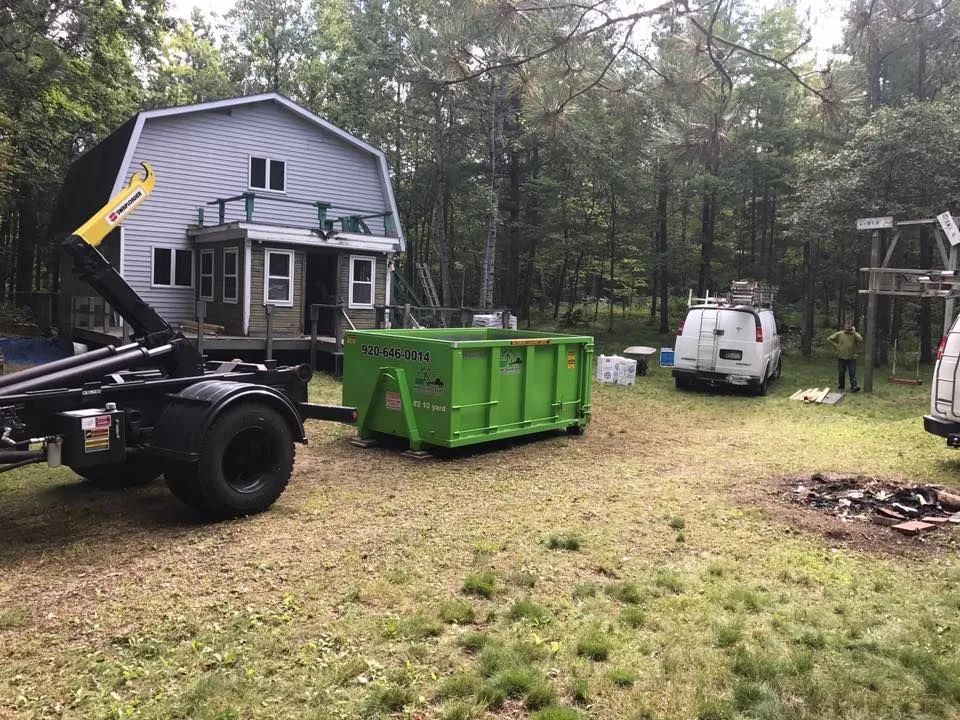
Short driveways, narrow access, low branches, or overhead wires may prevent larger containers from fitting. Two smaller deliveries can solve access challenges.
Uncertain Volume
When disposal needs are unclear, start with a smaller container. Order another if necessary, avoiding unnecessary space and expense.
Sorted Waste Streams
Separate concrete, clean yard waste, and household junk from the beginning. Organized loads simplify disposal, improve handling, and streamline pickup.
What Northeast Wisconsin Adds to the Equation
Local conditions shift the answer more than people expect. Green Bay area homeowners know the spring cleanout rush well. Once the snow clears and the ground thaws, garages, basements, and yards all get attention at the same moment, and containers get booked up. If you plan a large project for those weeks, locking in your plan early helps, whichever way you go.
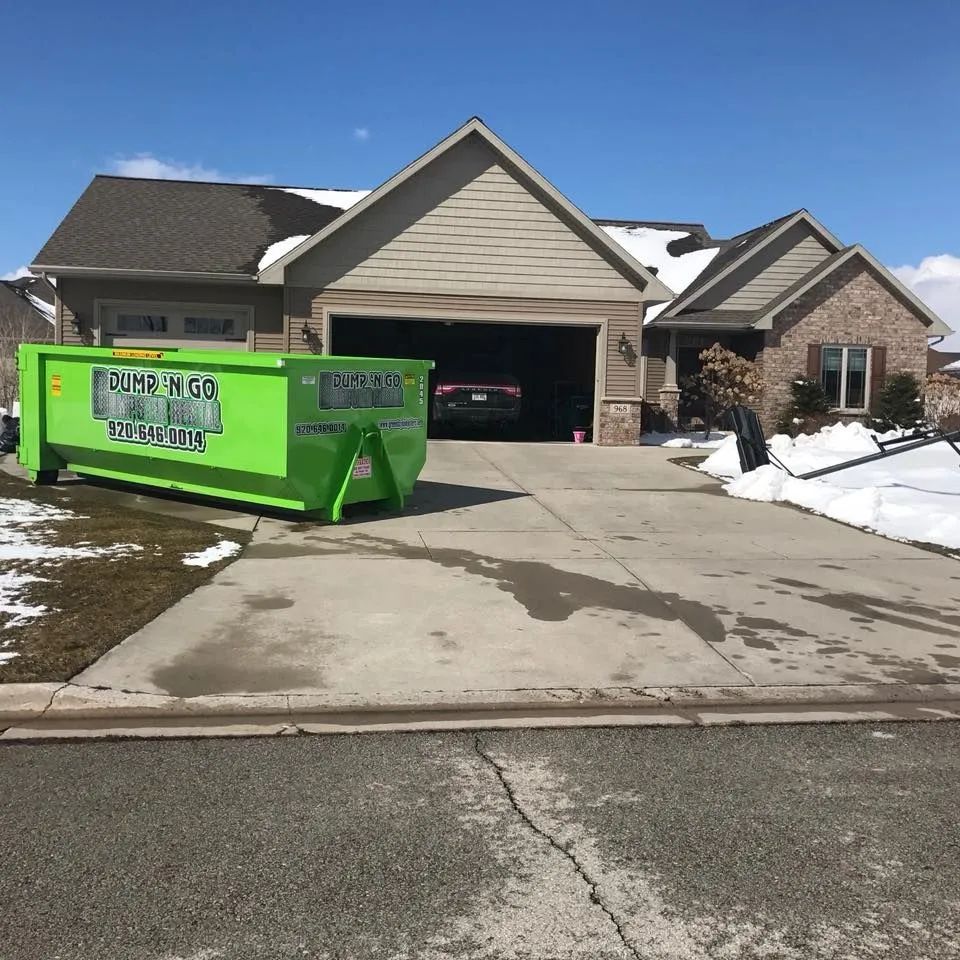
Winter matters too. Snow banks narrow driveways, packed ice makes placement trickier, and a container that would fit in July might feel tight in January. If you live in De Pere, Howard, Suamico, or Ashwaubenon where lots vary a lot from one street to the next, check your actual clearance in the season you will be working. Storm season brings its own wrinkle. After a heavy wind event, downed limbs and damaged siding arrive in a single mess, which tends to favor one larger container placed close to the work.
WARNING:
Never load a container above the fill line, no matter which plan you choose. Overfilled loads cannot be hauled safely, and the driver may have to leave debris behind until you remove it. If your pile will not fit, that is the signal to add a second container instead of stacking higher.
Protecting Your Driveway Either Way
Whether you rent one container or two, a loaded roll off is heavy, and concrete or asphalt takes stress from it. Set it on a flat, solid stretch and keep it away from the edge of the pavement, where the surface is weakest. Plywood or boards under the container spread the load and reduce the chance of scratches. If you are scheduling two hauls, remember that each delivery and removal is another pass over the same surface, so a clean, clear driveway helps the driver place the container correctly the first time.
Also think about neighbors and sightlines. A container that blocks a view at a corner or crowds a shared driveway can cause friction. One larger container may take more of your frontage at once, while two smaller ones spaced across the project occupy less at a time. Neither is wrong. It simply depends on your lot.
A Few Planning Tips That Apply to Both Plans
Break Things Down First
Flatten boxes, disassemble furniture, and shorten lumber. Compact, flat pieces maximize container space and reduce unnecessary gaps.
Load Heavy Items Low
Spread dense materials evenly across the container floor, then place lighter debris above them for balanced, safer loading.
Keep Prohibited Items Out
Separate paint, tires, batteries, chemicals, and restricted materials beforehand to prevent disposal problems and pickup delays.
Tell Your Provider The Truth About The Project
Explain your debris types, estimated weight, and placement location so your provider can recommend an appropriate container size.
Frequently Asked Questions
Is one large dumpster always better than two small ones?
No. A larger container wins when debris is light, arrives at once, and the driveway has room. Smaller hauls win when debris is heavy, phased, or space is tight. The project decides.
What if I order a dumpster that turns out too small?
You can usually arrange a swap, where the full container is hauled away and an empty one delivered. It adds a pause, so sizing up is smarter when your estimate lands between options.
Can I put concrete and household junk in the same container?
Often yes, as long as the total weight stays under the limit. Because dense material fills the weight allowance quickly, many people keep concrete separate. Describe your debris ahead of time.
How long should I keep the container for a project with phases?
Keep it only while you are actively filling it. If demolition and finish work are weeks apart, a haul after each phase beats leaving one container parked through the whole stretch.
Will a 20 yard container fit in a typical Green Bay driveway?
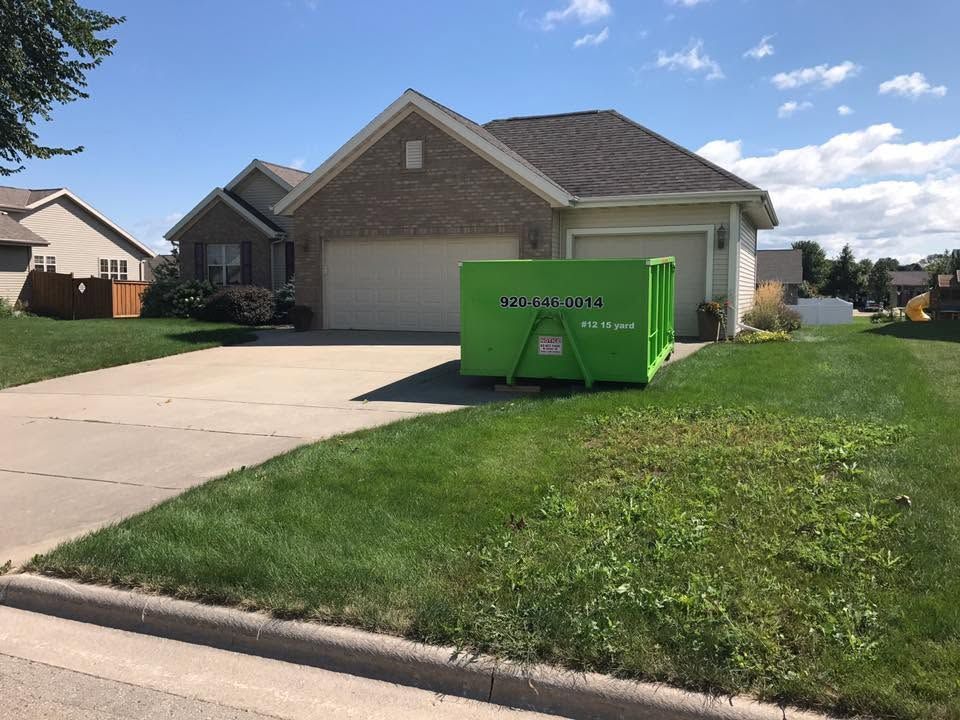
Many two car driveways handle one, but you need the length plus overhead clearance for the truck. Measure the space, look up for wires, and remember winter snow banks reduce usable room.
How do I know what my debris weighs?
Estimate by material. Light household items and yard waste weigh little for their volume, while concrete, tile, brick, dirt, and shingles are heavy. Describe any heavy group so loading stays within limits.
Making the Call With Confidence
The choice between one big dumpster and two smaller hauls comes down to the shape of your project: how much debris, how heavy it is, when it arrives, and where the container can sit. Light, fast, and roomy points to one large container. Heavy, phased, or tight on space points to smaller hauls. Run those four questions in order and the plan that keeps your cleanout, remodel, or demolition moving usually sorts itself out before you ever pick up the phone to book.
The last piece is matching that plan to your actual driveway and the season you will be working in, since Northeast Wisconsin snow banks and spring rushes change what fits. Dump 'N Go
has spent more than 10
years helping homeowners and contractors across Green Bay, WI, and nearby communities think this through, placing containers on lots of every shape. That local experience is what turns a confusing size question into a clear plan sized to the pile you actually have.