What Size Dumpster Do You Need for a Garage or Basement Cleanout?
July 16, 2026
Short term and long term dumpster rentals split along one line: whether your debris shows up all at once or keeps trickling in. Get that right and the rest falls into place.
Short term rentals are built for projects with a hard stop. Think a single garage or basement cleanout, one room torn down to the studs, a move out, or an estate clearing. The debris comes fast and then it's done. Most short term drops sit for two to seven days, which is plenty when the work happens in one push. Spring cleanouts after the snow finally melts and fall yard purges before the first hard freeze fit this pattern almost every time.
Long term rentals earn their keep when the mess arrives in waves. A whole house remodel, a new addition, ongoing commercial turnover, or landscaping spread across a season all feed a bin in bursts with quiet stretches between. These rentals run weeks, sometimes a month or more. The bin becomes part of the job site, not a one time visit. Because the building season is short, a lot of long term containers go out in summer when crews are racing to finish exterior work before cold weather shuts it down.
Quick Answer: For most garage or basement cleanouts, a 10-yard dumpster handles a single-car garage or a light purge, a 15-yard covers a two-car garage or a moderate basement, and a 20-yard suits a packed two-car garage, a full basement, or a garage-plus-basement job in one shot. The bigger factor than square footage is how much bulky furniture and how many years of stored boxes you are clearing. When you are honestly between two sizes, the larger one almost always saves you a second haul.
You open the garage on a Saturday morning, and there it is again: the wall of totes, the dead treadmill, the folding chairs from a party you can barely remember, and three bikes nobody has ridden since middle school. Down in the basement it is the same story, just dustier. You have finally blocked off the weekend to clear it all out, and the first real question is not where to start. It is how big a dumpster you need parked in the driveway so you can throw everything in one place and be done.
Guess too small and you are stacking overflow on the lawn waiting on a second drop. Guess too big and you are staring at a half-empty container wondering why you did not think it through. Getting the size right up front is the difference between a clean weekend and a frustrating one. Here is how to match the dumpster to what you are actually clearing, whether it is a garage, a basement, or both.
Start With What You Are Actually Throwing Away
Square footage is where most people start, and it is the wrong anchor. A two-car garage that holds one shelf of paint cans is a completely different job than a two-car garage packed to the rafters with furniture. What fills a dumpster is volume and bulk, not floor area.
Take an honest inventory first
Before you think about yards, walk the space and mentally sort it into three piles: keep, donate, and toss. Only the toss pile goes in the dumpster, and that is the pile you are sizing for. Most people badly underestimate it. Years of accumulated boxes, broken tools, and forgotten gear take up far more room than they seem to when they are tucked against a wall.
Count the bulky pieces
Furniture is the single biggest space-eater in a cleanout, and it does not compact. A couch stays couch-sized no matter how you wedge it. Sofas, mattresses, filing cabinets, dressers, and old shelving units eat volume fast. If your toss pile has three or more large pieces, that alone can push you up a size. A basement full of old sectional furniture and a garage of loose clutter will not need the same container even if the rooms are the same size.
Factor in the heavy and awkward stuff
Wet, dense, or oversized items change the math. Waterlogged carpet from a basement, an old workbench, a busted lawn tractor, or a pile of scrap lumber takes up more practical space than a stack of flattened boxes. Note these when you plan, because they set the floor for how much room you truly need.
The Sizes That Fit Garage and Basement Cleanouts
For home cleanouts, three roll-off sizes cover almost every job. You rarely need the giant construction containers for household clutter, so the real decision usually lives between a 10, a 15, and a 20-yard.
The 10-yard: small purges and single-car garages
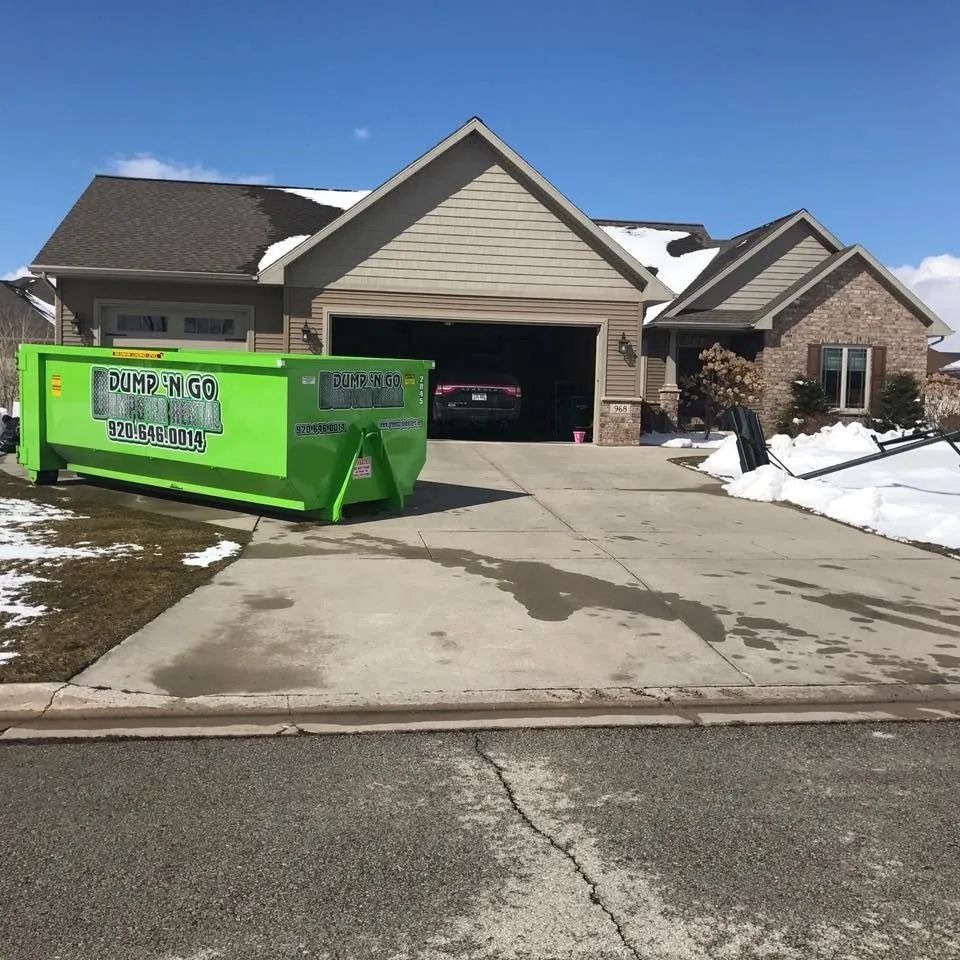
A 10-yard roll-off runs roughly 14 feet long, 7 to 8 feet wide, and about 3 to 4 feet tall, holding around three pickup-truck loads of debris. That makes it a solid pick for a single-car garage cleanout, a light basement declutter, or clearing out a specific corner or room. If you are tossing boxes, small furniture, and general clutter without a lot of big pieces, this size keeps things simple and fits neatly on a driveway.
The 15-yard: two-car garages and moderate basements
Step up to a 15-yard, around 16 feet long with taller walls in the four-and-a-half-foot range and roughly four to five truckloads of capacity, and you cover most two-car garage cleanouts and moderate basement projects. This is the workhorse size for a household that is clearing shelving units, a few pieces of furniture, and a moderate amount of junk in one go. Waste haulers routinely point homeowners here for decluttering a basement or cleaning out a garage, because it holds real volume without dominating the driveway.
The 20-yard: the big one-and-done
A 20-yard is the most popular home-cleanout size, and for good reason. At about 22 feet long and roughly six truckloads of room, it swallows a packed two-car garage, a full basement, or a garage-and-basement combo in a single rental. It has the space for furniture and bulky household items without you playing Tetris the whole weekend. If you are clearing an estate, downsizing before a move, or finally tackling years of buildup across multiple spaces, this is usually the size that gets it done in one drop and one pickup.
TIP: Before you book, pull the biggest items out to the driveway and eyeball them together in a group. Furniture and appliances look small against a wall but reveal their true bulk once they are staged in one pile. Seeing the toss pile assembled is the fastest way to gut-check whether you are a 15 or a 20.
When a Garage and Basement Combine Into One Job
Plenty of homeowners tell themselves they will only do the garage, then momentum carries them straight down the basement stairs. If there is any chance you tackle both in the same weekend, plan the dumpster for both from the start. Renting for the garage and then discovering you have filled it before you touch the basement is how a one-weekend project turns into a two-week one.
Add the two toss piles together, then round up. A single-car garage plus a light basement often lands in 15-yard territory. A two-car garage plus a real basement cleanout pushes toward a 20-yard. Combining jobs is usually the moment to size up, because the volume from two spaces stacks faster than people expect and the last thing you want is to stop mid-weekend.
Think about how the seasons stack your calendar. Around Northeastern Wisconsin, the garage and basement tend to hit their breaking point at the same time. Spring cleanout season, the stretch after a long snowy winter of shoving things inside, and the fall push before the holidays all drive people to clear everything at once. If you are clearing seasonal decor, old patio gear, and basement storage in the same swing, plan for the combined haul rather than the single room you started with.
Why Sizing Up Beats Sizing Down
There is a natural instinct to order the smaller container and hope it works. With cleanouts, that instinct usually costs you time. A dumpster that fills before the job is done leaves you with debris on the ground, a stalled weekend, and a wait on a second delivery or a swap-out before you can finish.
A little extra room is cheap insurance for your weekend
When you are genuinely on the fence between two sizes, the larger one is almost always the better call. The gap in space between a 15 and a 20 is real, and having it means you keep working instead of stopping. Nearly every hauler will tell you the same thing: the homeowners who call back mid-project are the ones who guessed small.
Loading smart stretches whatever size you pick
How you fill the container matters as much as the number on the side. Put heavy, flat items like plywood, old doors, and disassembled furniture on the bottom to build a stable base. Break down everything that comes apart, because a disassembled shelf or bed frame takes half the room of an intact one. Flatten cardboard, fill the gaps between big items with bags of loose junk, and stack deliberately instead of tossing things in at random. Loaded well, a 15-yard can hold what a carelessly filled one never would.
WARNING:
Keep everything below the top rail of the container. Debris mounded above the fill line cannot be legally or safely hauled, which means the truck may not take it until you pull the overage back off. Items hanging over the sides are a road hazard during transport. If you are running out of room, load tighter or size up rather than piling above the walls.
Frequently Asked Questions
What size dumpster do I need for a two-car garage cleanout?
Most two-car garages fit well in a 15-yard dumpster for boxes, shelving, furniture, and debris. If the space is packed or includes extra areas, a 20-yard dumpster provides the room needed to finish.
Is a 10-yard dumpster big enough for a basement cleanout?
A 10-yard dumpster works for smaller basement decluttering projects. Full basement cleanouts with furniture, carpet, and stored items usually require a 15 or 20-yard container to handle the larger volume.
How do I estimate how much I am throwing away?
Separate items into keep, donate, and toss piles, then estimate only the waste. Consider large furniture first, add boxes and clutter, and choose the larger dumpster size if you are between options.
Can I put furniture and mattresses in a cleanout dumpster?
Yes, furniture and mattresses are common dumpster items. Since bulky pieces take up significant space, plan your dumpster size carefully. Breaking down tables, frames, and shelving helps maximize available container space.
What can't go in the dumpster during a garage cleanout?
Avoid placing hazardous items like paint, chemicals, oil, batteries, and propane tanks inside. Electronics, tires, and refrigerant appliances often need special disposal. Set these items aside before loading your dumpster.
Should I get a bigger dumpster than I think I need?
If you are unsure between two dumpster sizes, choosing the larger option is often better. Extra space prevents delays, avoids second hauls, and helps you complete your cleanout in one efficient project.
Getting the Garage and Basement Cleared in One Weekend
A garage or basement cleanout comes down to one honest question answered up front: how much are you really throwing away? Size the dumpster to the toss pile, not the square footage, count the bulky furniture that drives the volume, and when you are stuck between two sizes, round up so you finish in one go instead of stalling out on a Sunday afternoon. Plan for both spaces if there is any chance you tackle both, pull the hazardous items and tires out before loading day, and stack the container heavy-on-the-bottom so you use every yard you paid for. Do that, and the wall of totes and the dead treadmill are gone by the time the weekend is over.
Book a
garage or basement cleanout dumpster
— Tell us what you are clearing and we will help you choose the right 10, 15, or 20-yard roll-off so you finish in one weekend without needing a second haul. Serving Green Bay, Wisconsin with 10+ years of experience, Dump 'N Go
delivers driveway-friendly containers across Northeastern Wisconsin with same-day delivery and pickup, free same-day estimates, and the local, owner-operated care that has kept homeowners coming back for years. Reach out to get your dumpster on the driveway and your space back.